4 hr 30 min
Bay of Islands Hole in the Rock Cruise with Twin Island Landings
- Entry ticket
- Mobile voucher
- Valid same day
- Free cancellation
Hole in the Rock Dolphin Cruise — Bay of Islands Marine Voyages
Sail through Motukōkako's carved arch, encounter bottlenose dolphins in open water
Compare fares, pick the fit — all bookings are mobile-voucher and eligible for free cancellation where shown.
4 hr 30 min
4 hr 30 min
3 hr
Selecting the right ticket for your hole in the rock dolphin cruise paihia experience depends on whether you prefer a standard coastal journey or an extended regional exploration. Each hole in the rock dolphin cruise paihia tour offers unique access to the bay's pristine marine environment and coastal landmarks.
|
Top pick Standard Cruise Full Bay Experience |
Combo Deal Cruise + Cape Reinga | |
|---|---|---|
| Price (Adult) | 170 NZD | 290 NZD |
| Duration | 4.5 hours | Over 2 days |
| Island Stopover | Otehei Bay | Included at Otehei Bay |
| Marine Mammal Viewing | Licensed vessel (May-Sept guarantee) | Licensed vessel |
| Best for | First-timers | Extended island explorers |
| See tickets & prices |
Verdict: First-time visitors should choose the standard hole in the rock dolphin cruise paihia tickets for an efficient and iconic trip, while those seeking deeper regional immersion may prefer the combined excursion.
Worth it for wildlife enthusiasts and geology fans
The hole in the rock dolphin cruise paihia delivers exceptional value by combining two distinct experiences—passage through a natural volcanic archway and potential dolphin encounters in the Bay of Islands marine reserve. Standard cruises start from the Maritime Building in Paihia, with fast boat adventures offering adrenaline-focused alternatives. The geological formation itself is a 60-million-year-old sea cave carved through Motukōkako Island, accessible only by water and weather-dependent for safe passage. Wildlife sightings are genuine—pods of bottlenose and common dolphins frequent these waters year-round, though marine mammals follow their own schedule rather than tour timetables. The catamaran option provides smoother rides for those prone to seasickness, while twin island landing tours add shoreline exploration that justifies the cost. At 170 NZD for the standard cruise, you're paying for access to protected marine environments and expert commentary on Māori history tied to Cape Brett. The hole in the rock dolphin cruise paihia tours reward patient travelers willing to accept nature's unpredictability over manufactured guarantees.
Bottom line: Book the hole in the rock dolphin cruise paihia tickets if geological access and authentic wildlife interaction matter more to you than predictable photo opportunities.
They complement each other; most visitors who do both call the dolphin cruise the more thrilling encounter with marine wildlife, while the tall ship experience offers a more tranquil, hands-on maritime adventure.
|
Top pick Hole in the Rock Dolphin Cruise |
Tall Ship Sailing Experience | |
|---|---|---|
| Primary focus | Dolphin and wildlife spotting | Sailing and island relaxation |
| Vessel type | Purpose-built power catamaran | Historic tall ship |
| Duration | 4.5 hours | 5.5 hours |
| Inclusions | Island stop at Otehei Bay | Barbeque lunch and tea |
| Intensity level | Moderate to high (ocean swell) | Relaxed (wind-powered) |
| Activity style | Observation and speed | Hands-on rigging and steering |
| Standard price | 170 NZD | 205 NZD |
| See tickets & prices |
Verdict: Choose the hole in the rock dolphin cruise paihia for a high-speed search for marine life, or opt for the tall ship if you prefer an immersive, slower-paced day of learning traditional sailing techniques.
Hand-picked experiences loved by thousands of travelers
3 hours
Free Cancellation
Three-hour coastal adventure through 144 islands with wildlife encounters and iconic rock formation
1.5 hours
Free Cancellation
High-speed catamaran tour exploring 144 islands, wildlife spotting, and coastal caves in 90 thrilling minutes
4.5 hours
Free Cancellation
Explore 144 islands by catamaran, sail through the famous Hole in the Rock, and enjoy lunch on a pristine island beach.
3 hours
Free Cancellation
Explore 144 islands by boat, hike to panoramic lagoon views, and cruise past the iconic Hole in the Rock
5.5 hours
Free Cancellation
Four-hour eco-cruise through protected waters, spotting dolphins and marine life, with island stopover
8.5 hours
Free Cancellation
Explore iconic landmarks, swim at a pristine island bay, and watch for marine life on this classic maritime adventure.
22 hours
Free Cancellation
Sleep aboard a vessel anchored in the Bay of Islands with snorkeling, kayaking, and fresh seafood
2 days
Free Cancellation
Journey north to explore Māori culture, ancient kauri forests, historic Waitangi, and cruise among 144 islands
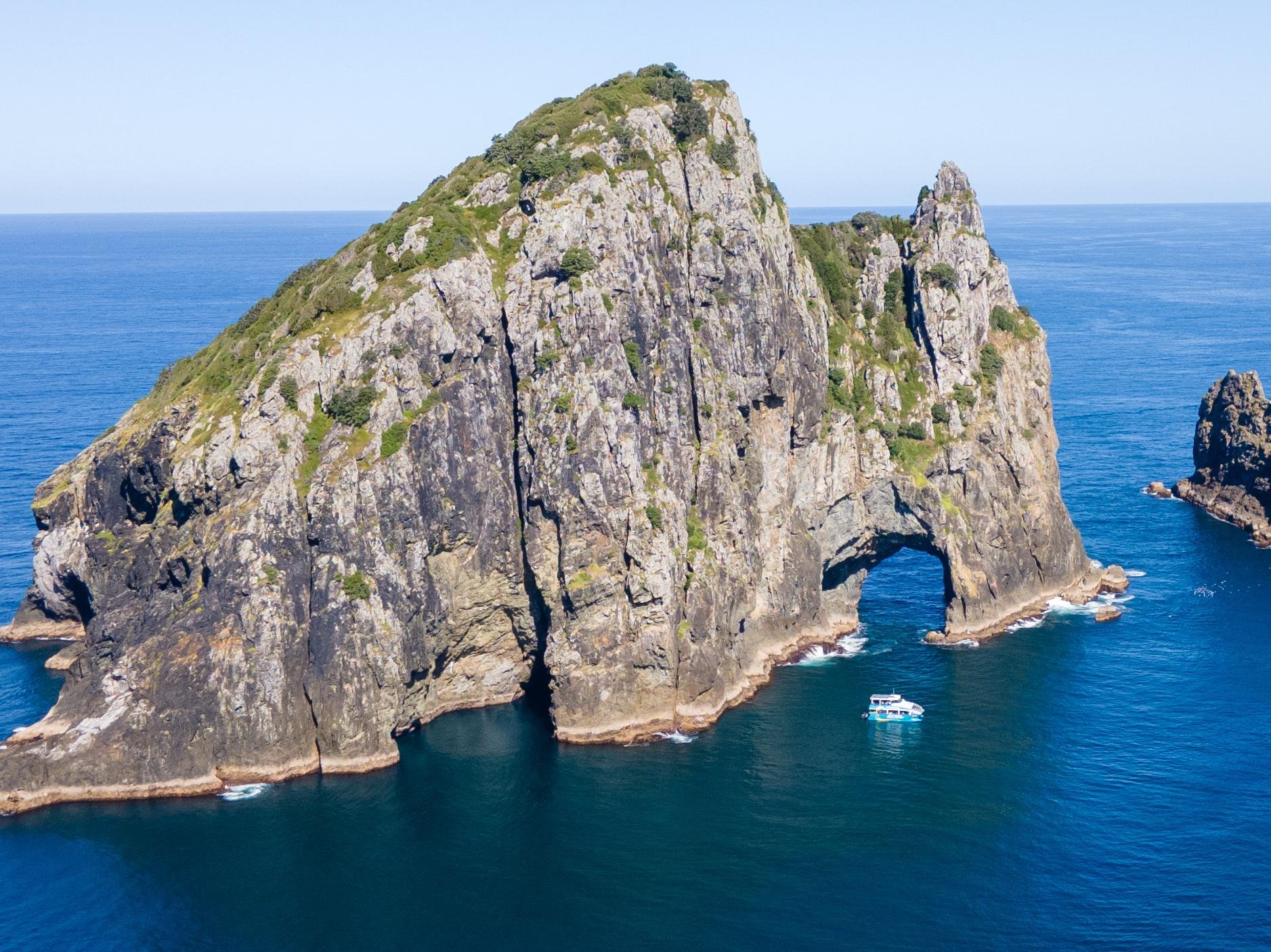
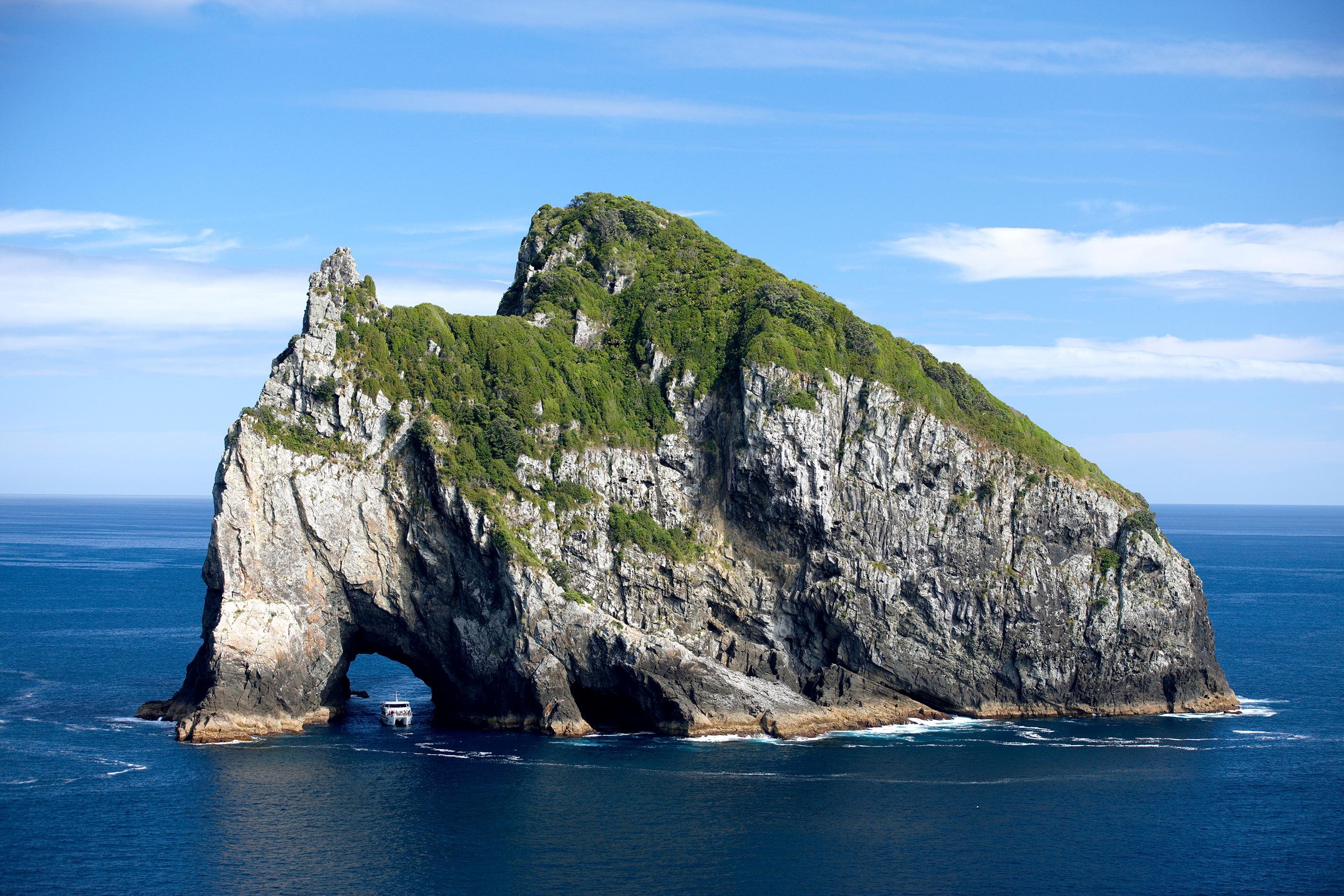
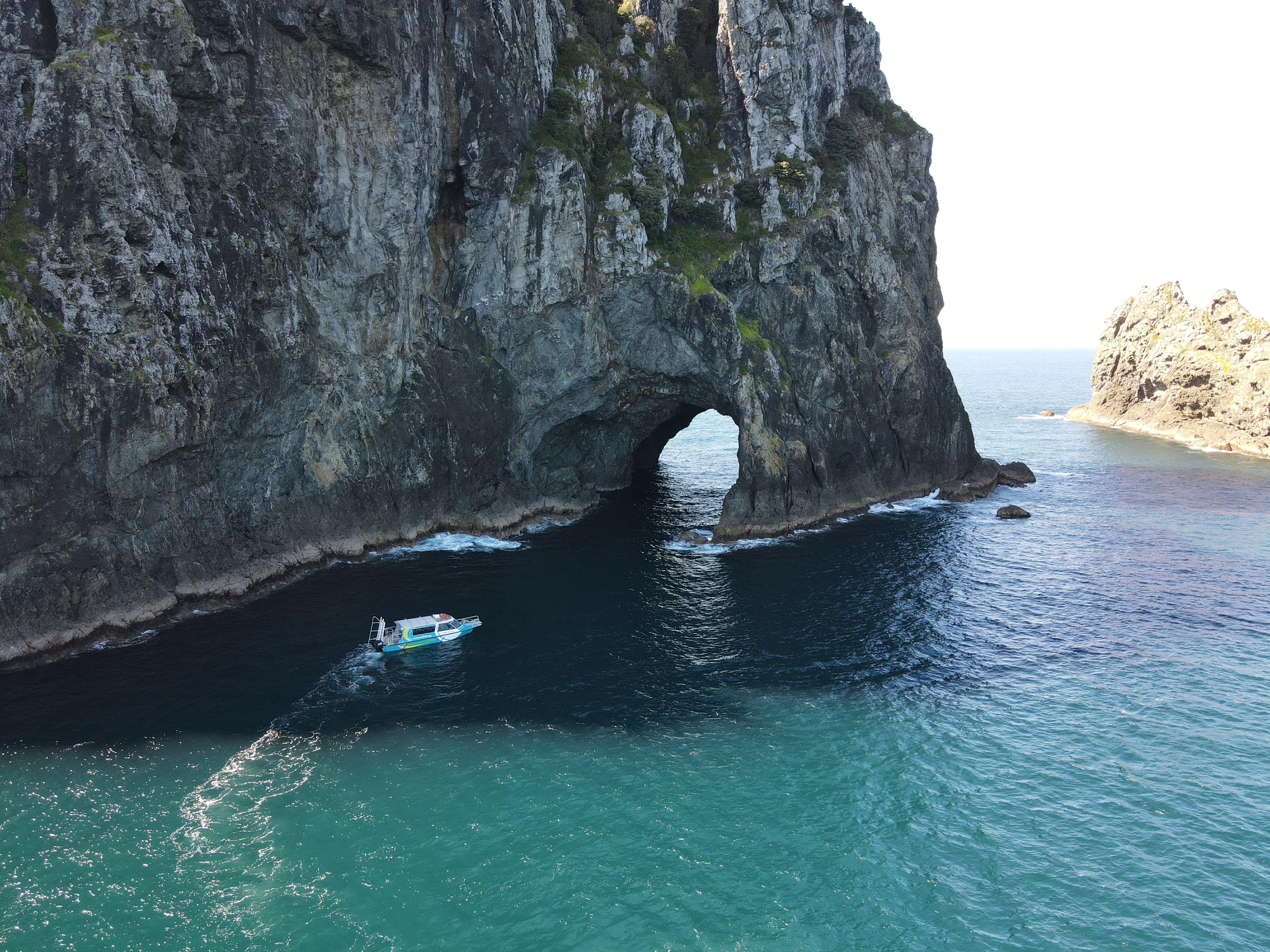
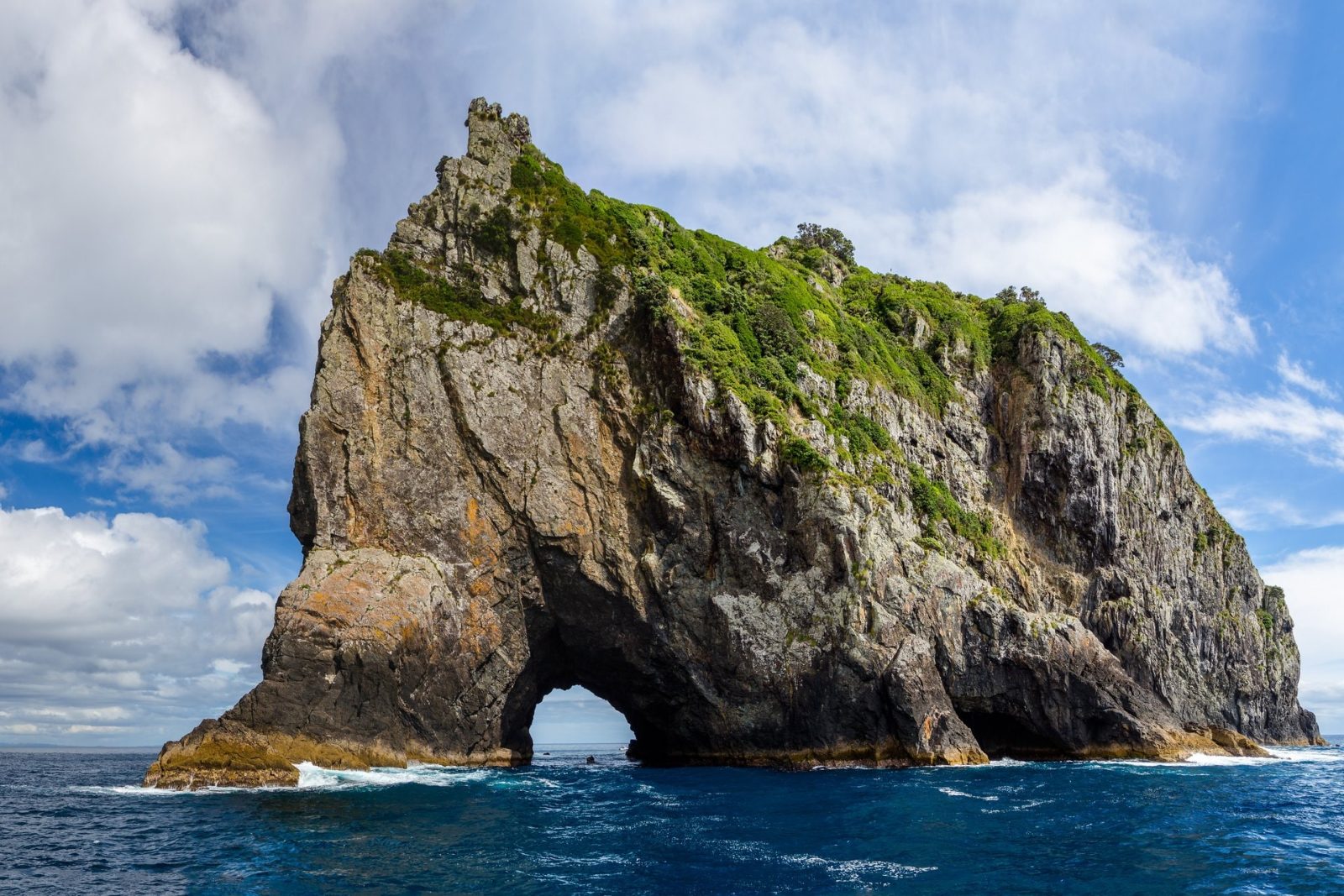
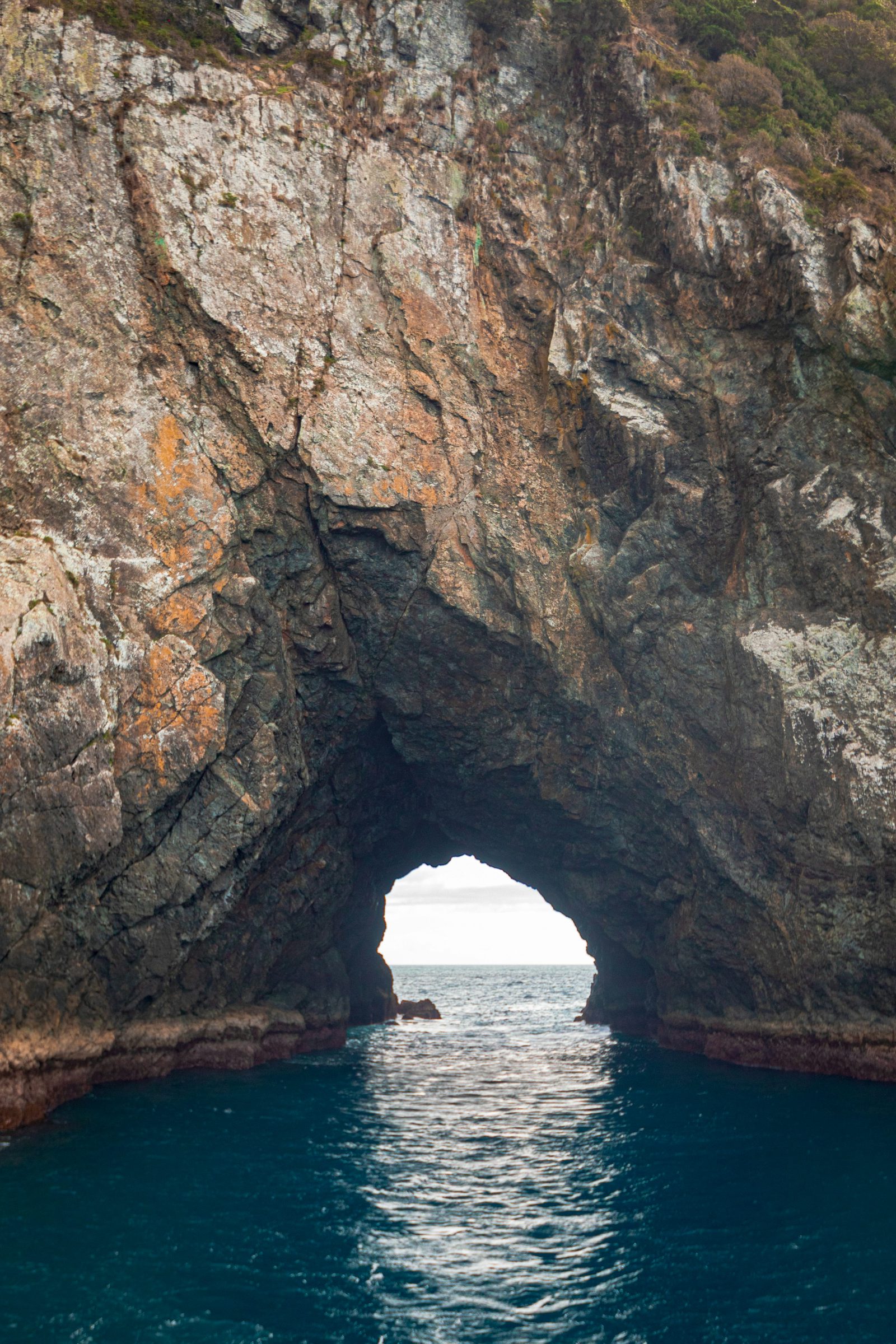
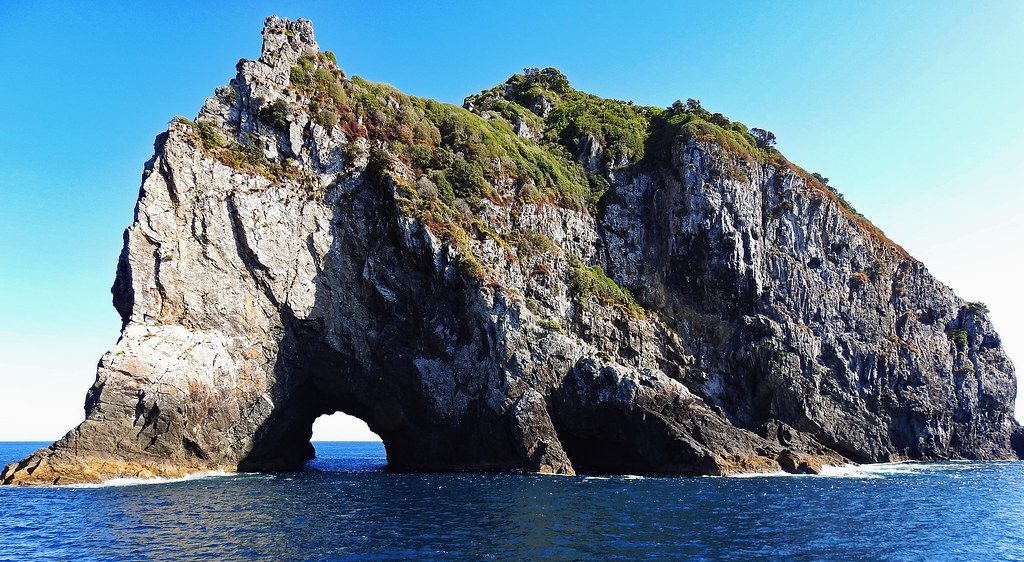
This iconic natural arch is a result of centuries of wind and wave erosion at the tip of the Cape Brett Peninsula. It stands approximately 16 metres high and boats pass through when sea conditions permit.
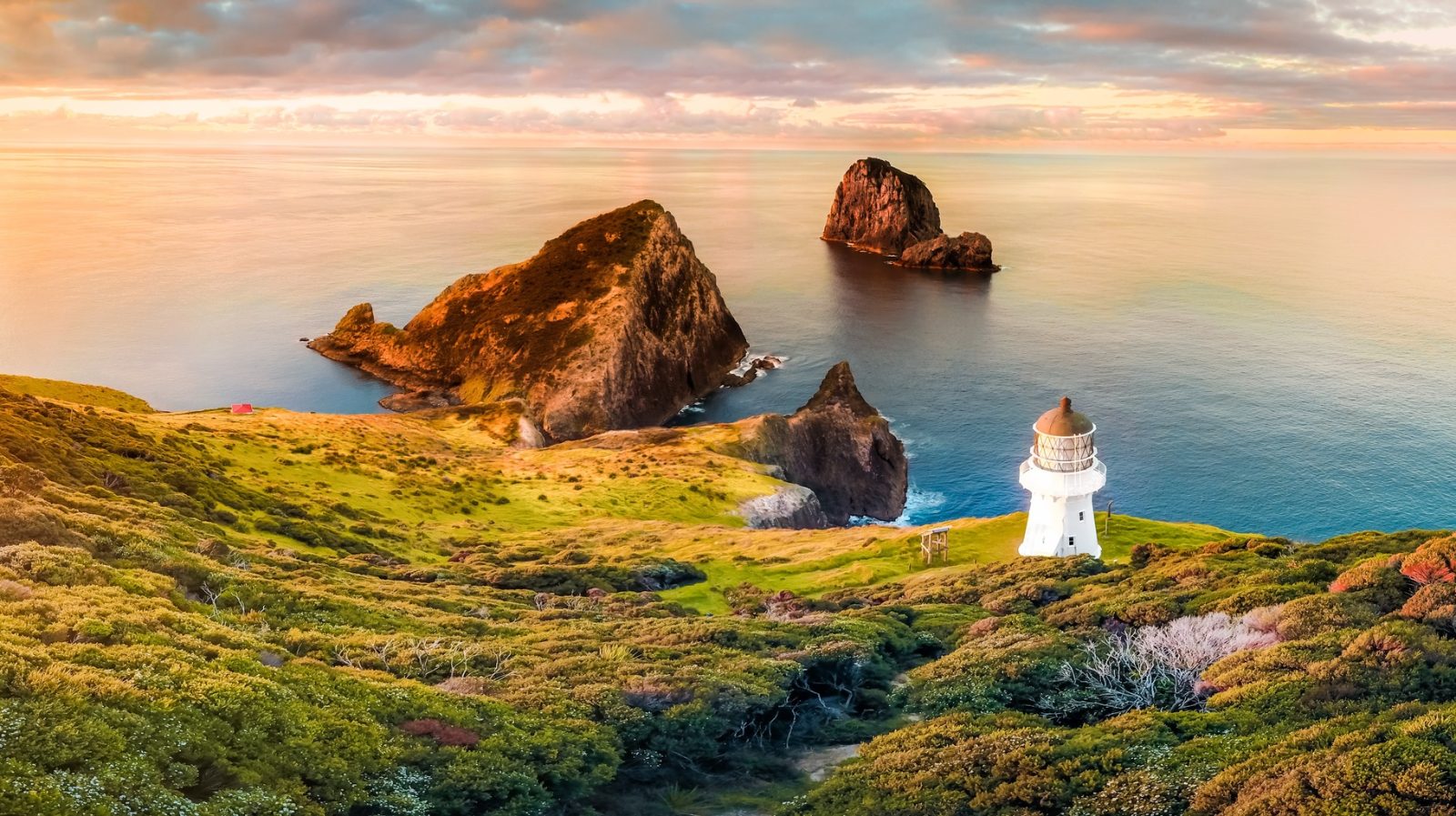
Situated on the Cape Brett Peninsula, this historic lighthouse has served as a navigational landmark for generations of mariners in the Bay of Islands.
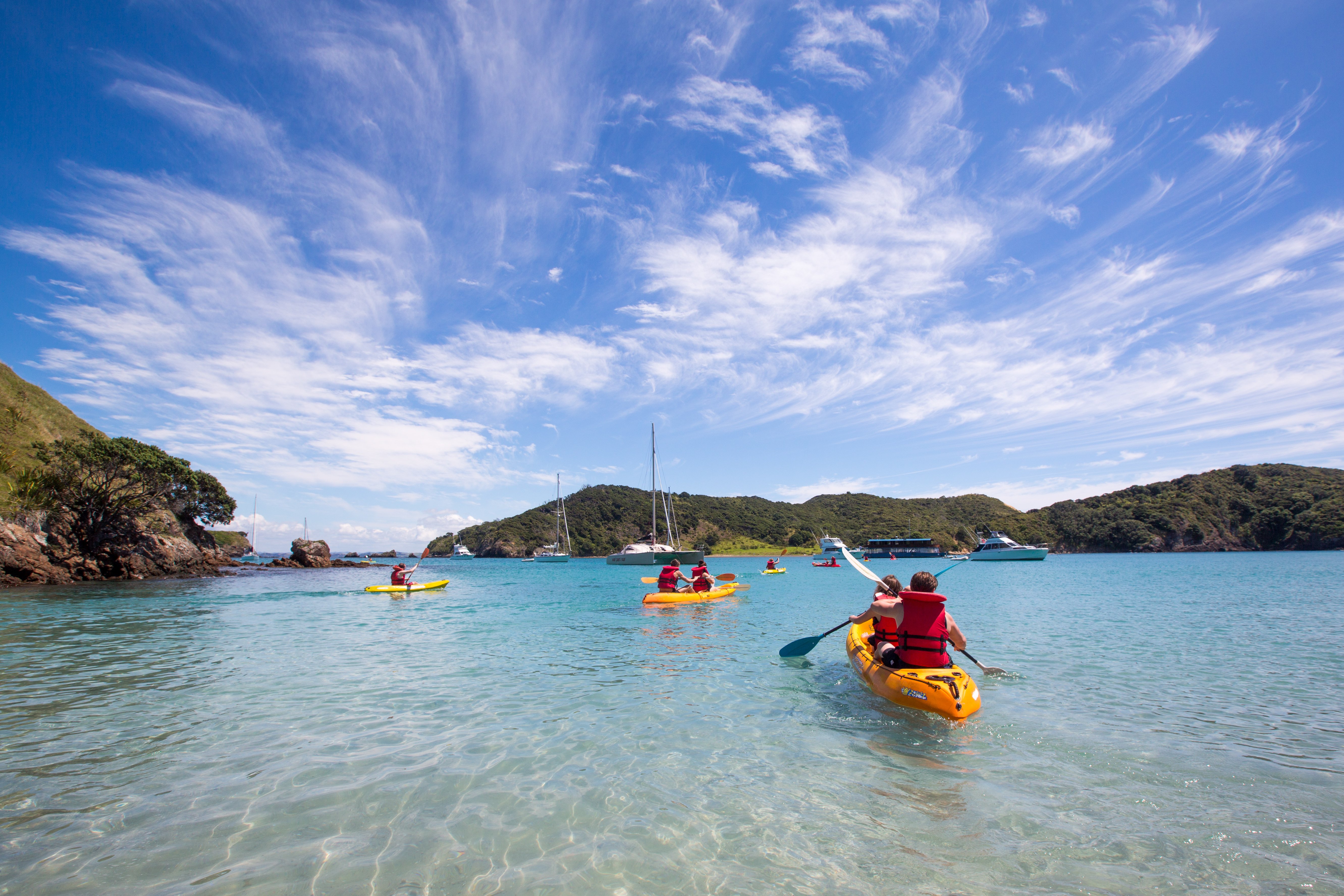
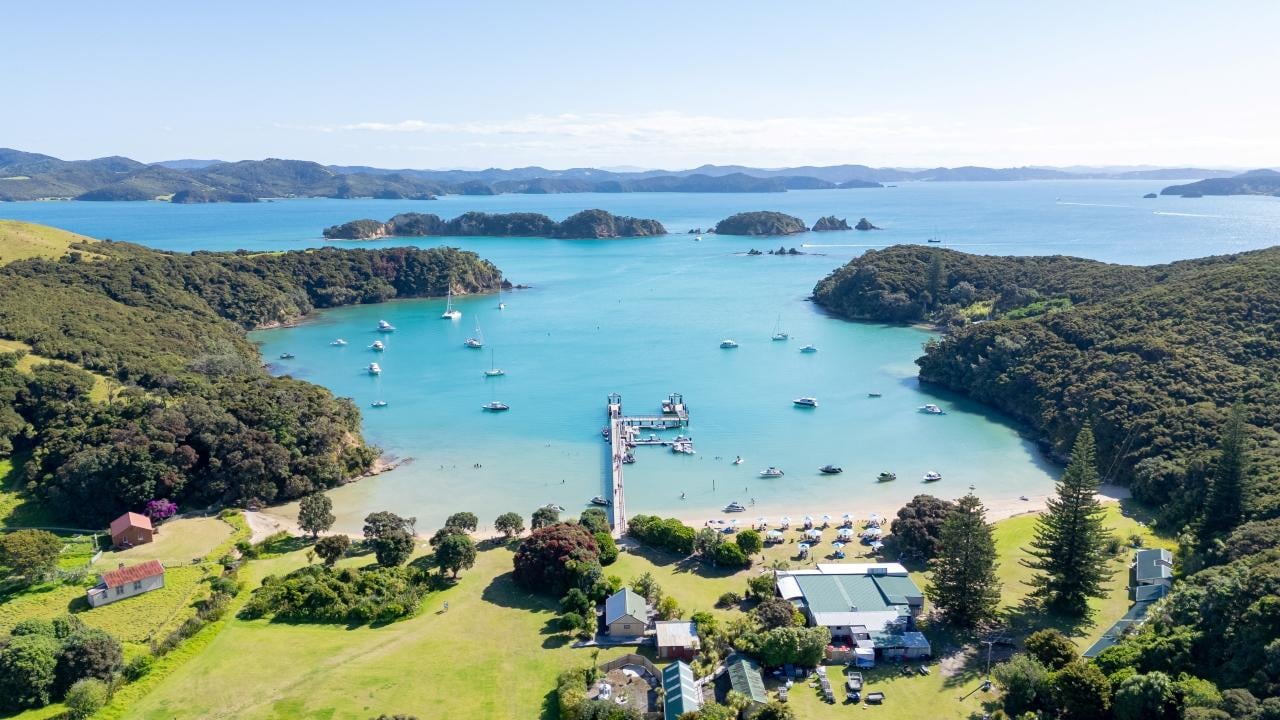
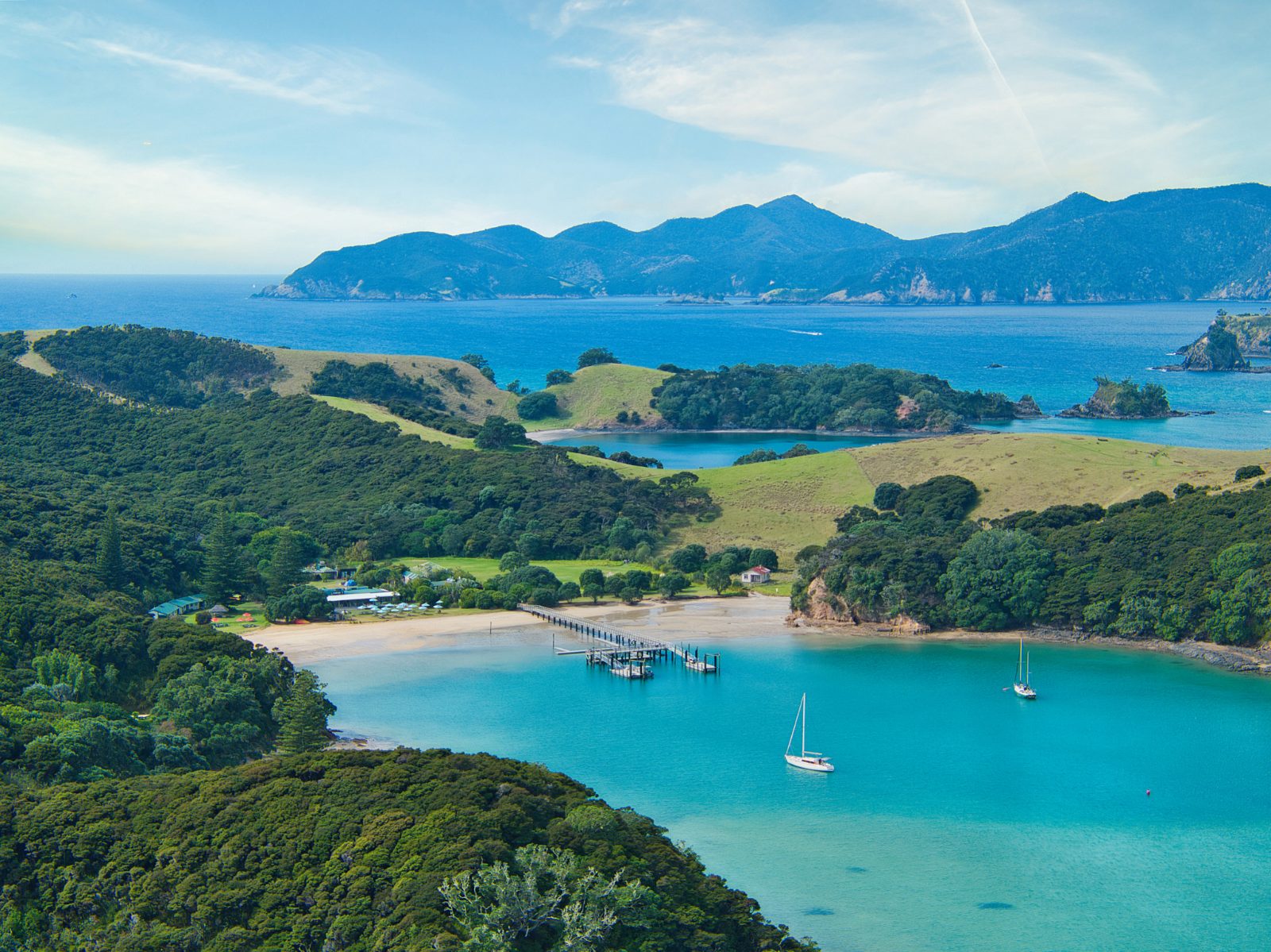
Located on Urupukapuka Island, this stop offers a chance to relax on white sand beaches, swim, or explore island walking tracks.
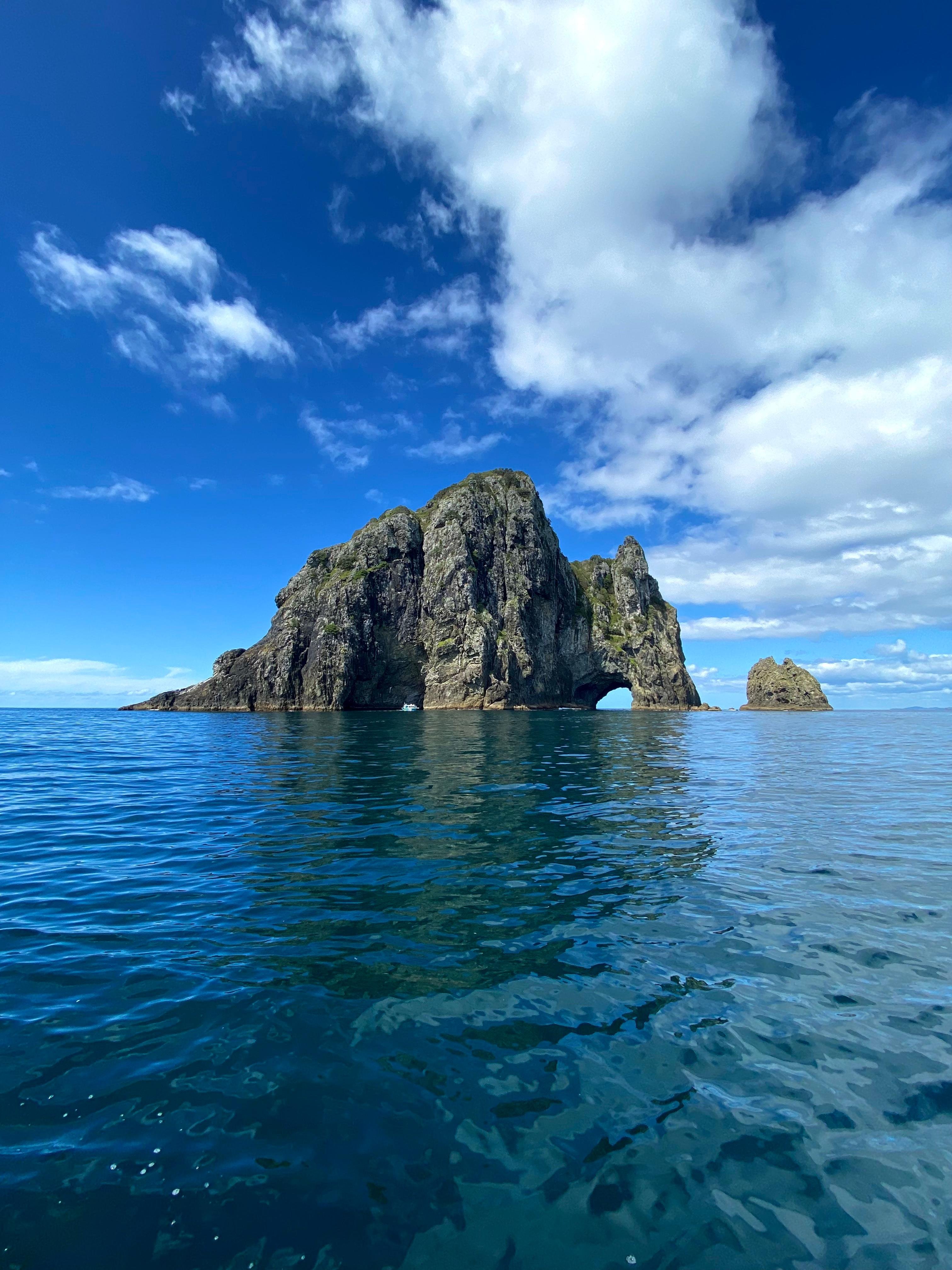
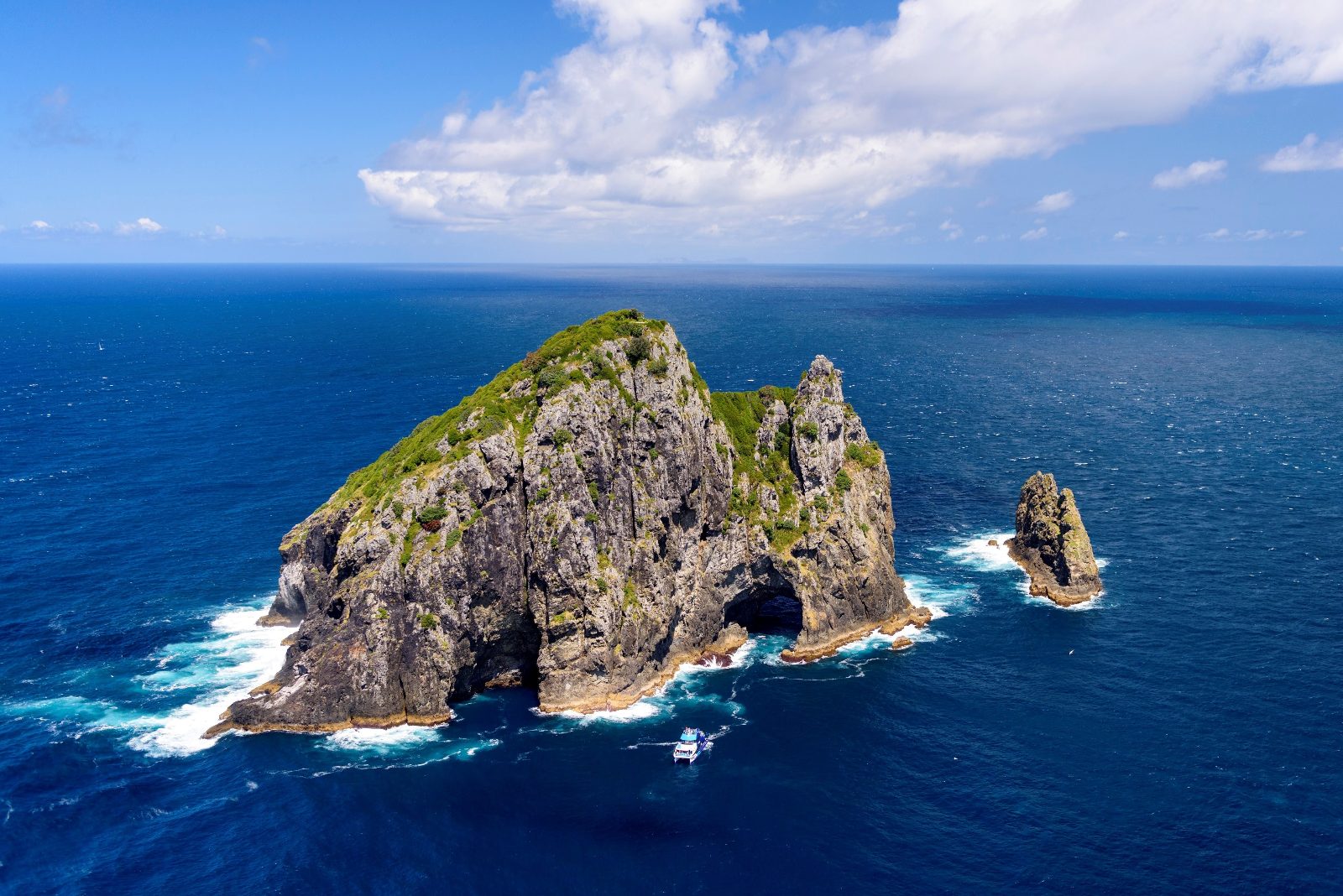
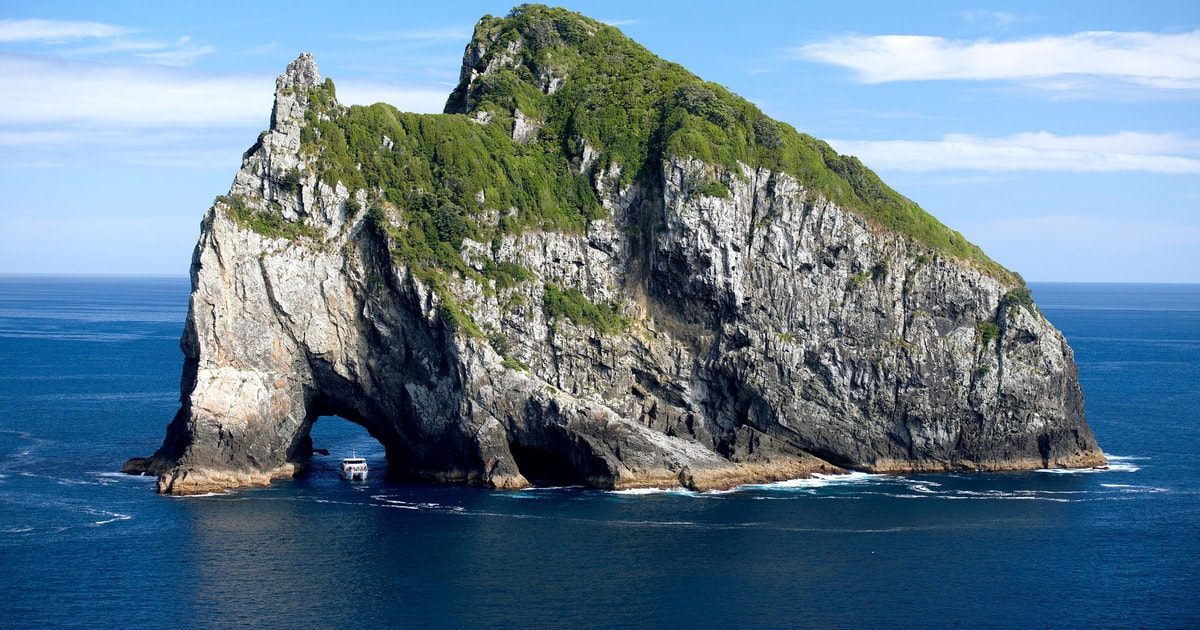
Known locally as Motukōkako, this island forms the base of the massive geological archway that defines the region.
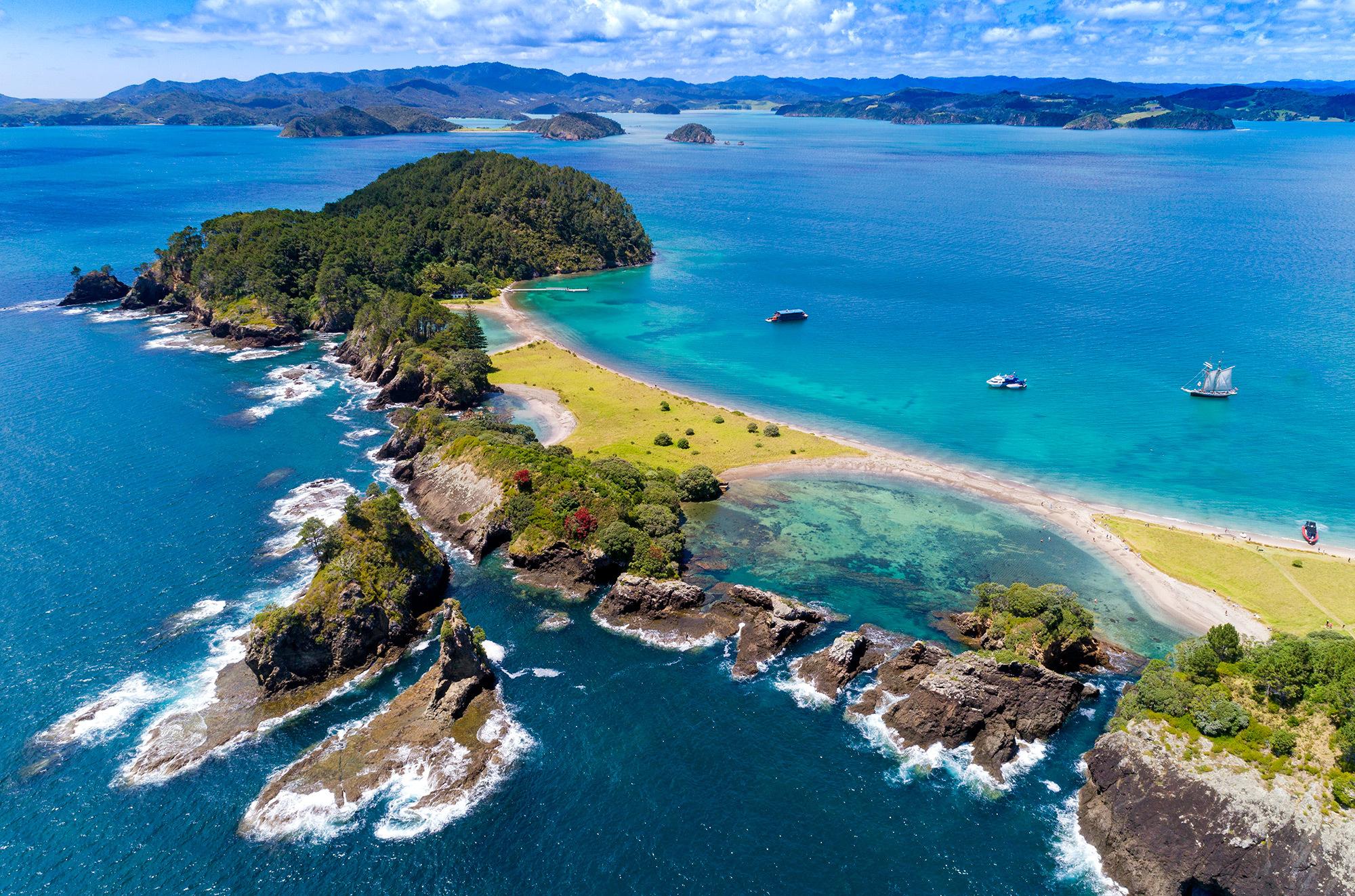
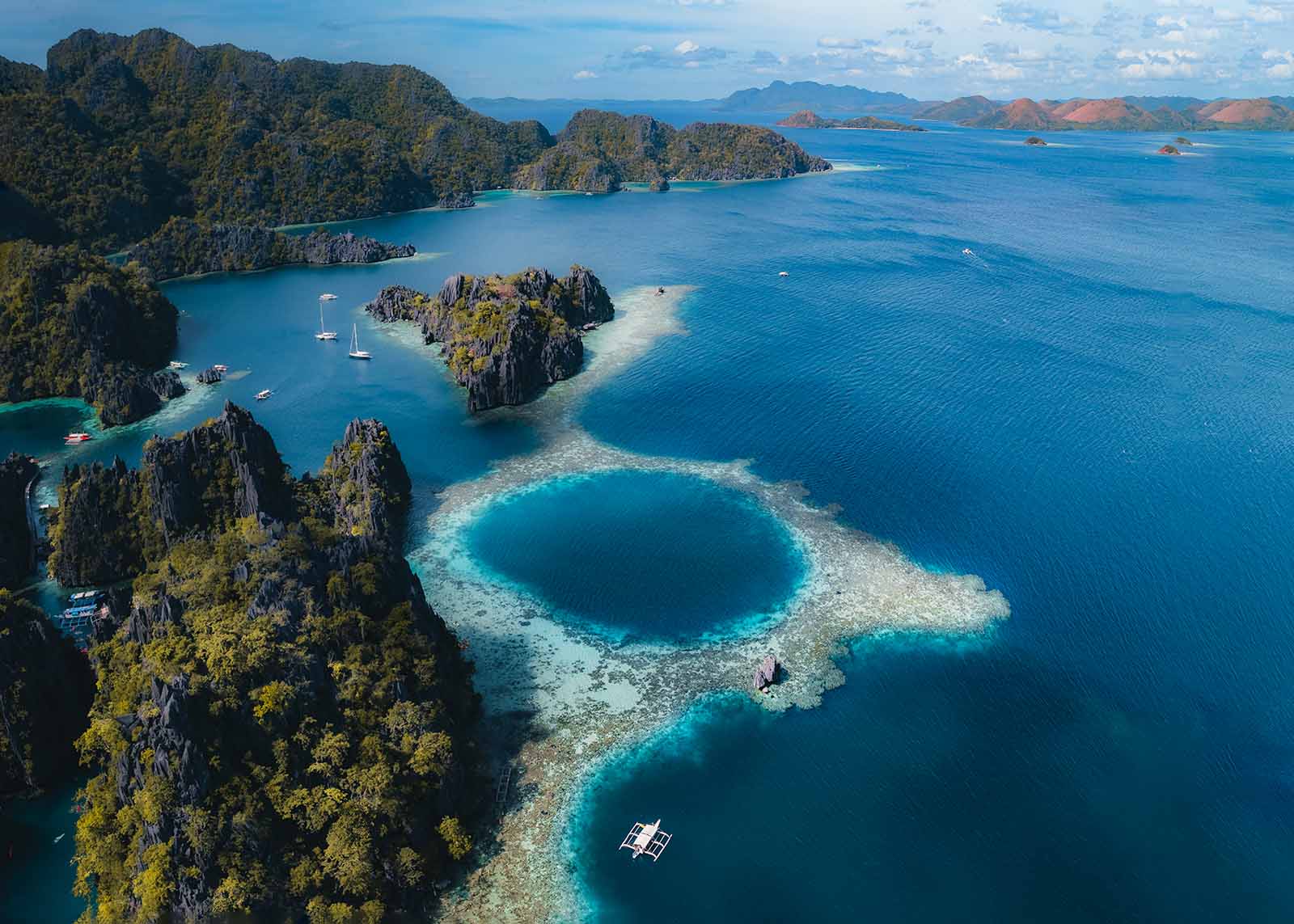
Viewed from Roberton Island, these shallow, turquoise lagoons are a signature scenic highlight of the Bay of Islands.
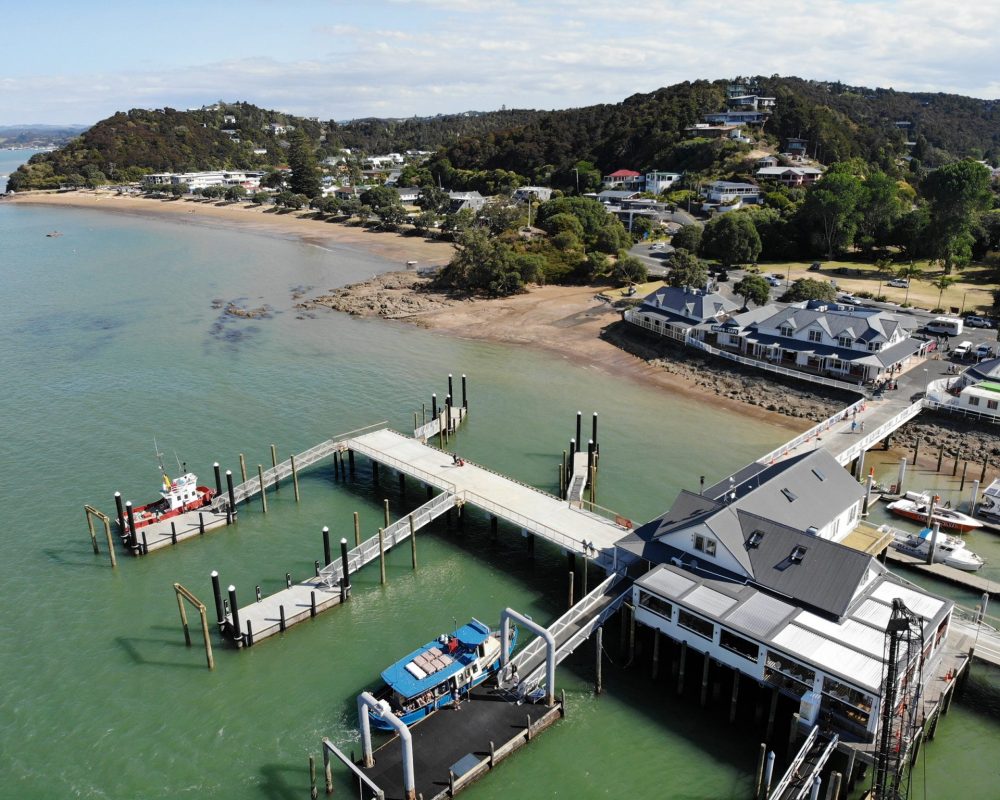
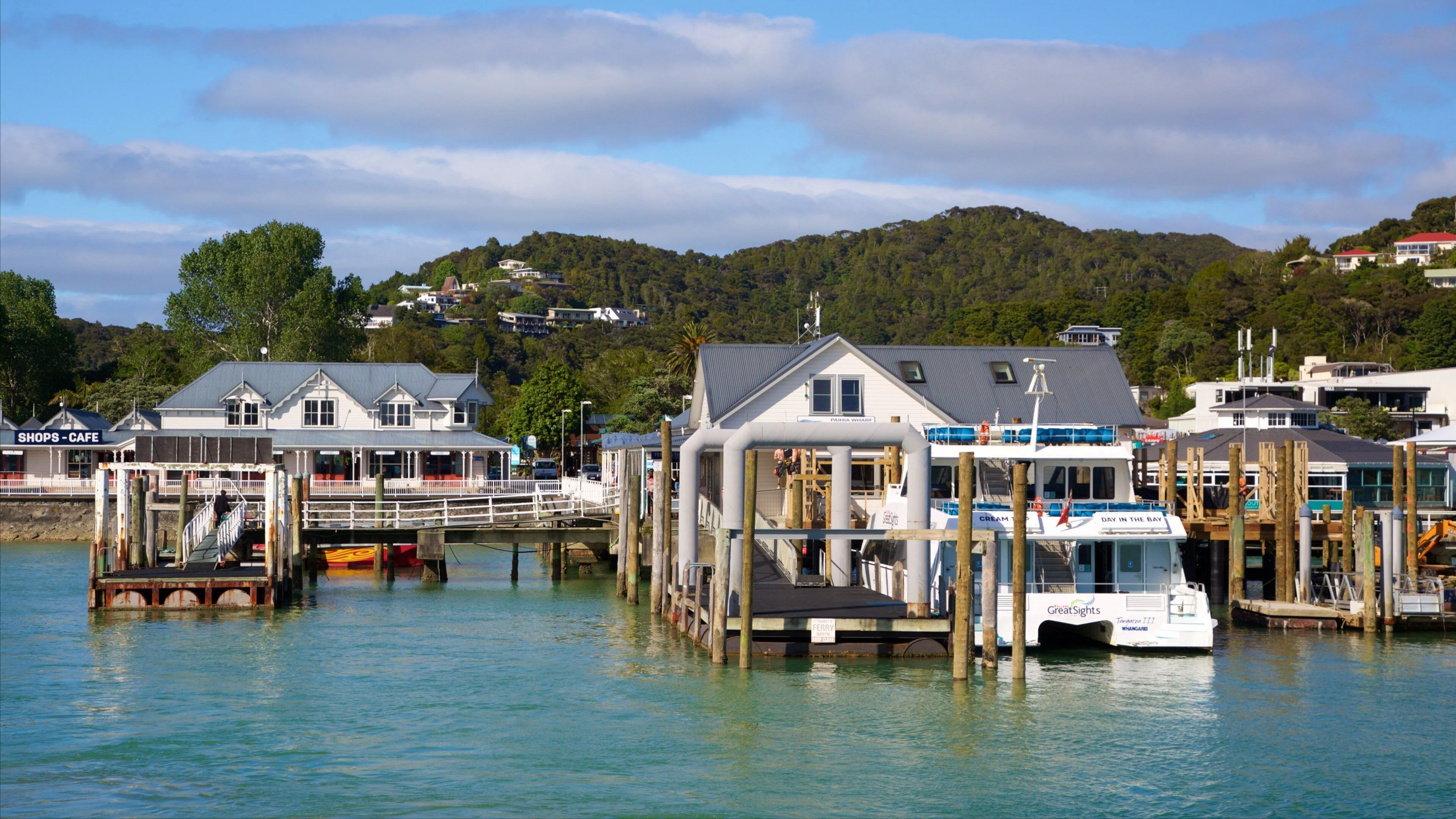
You board at the Maritime Building pontoon, where crew brief you on the day's route and check tide tables for the rock transit window. The catamaran clears Paihia harbour within five minutes, accelerating to 20 knots as it crosses the inner bay toward Moturua Island.
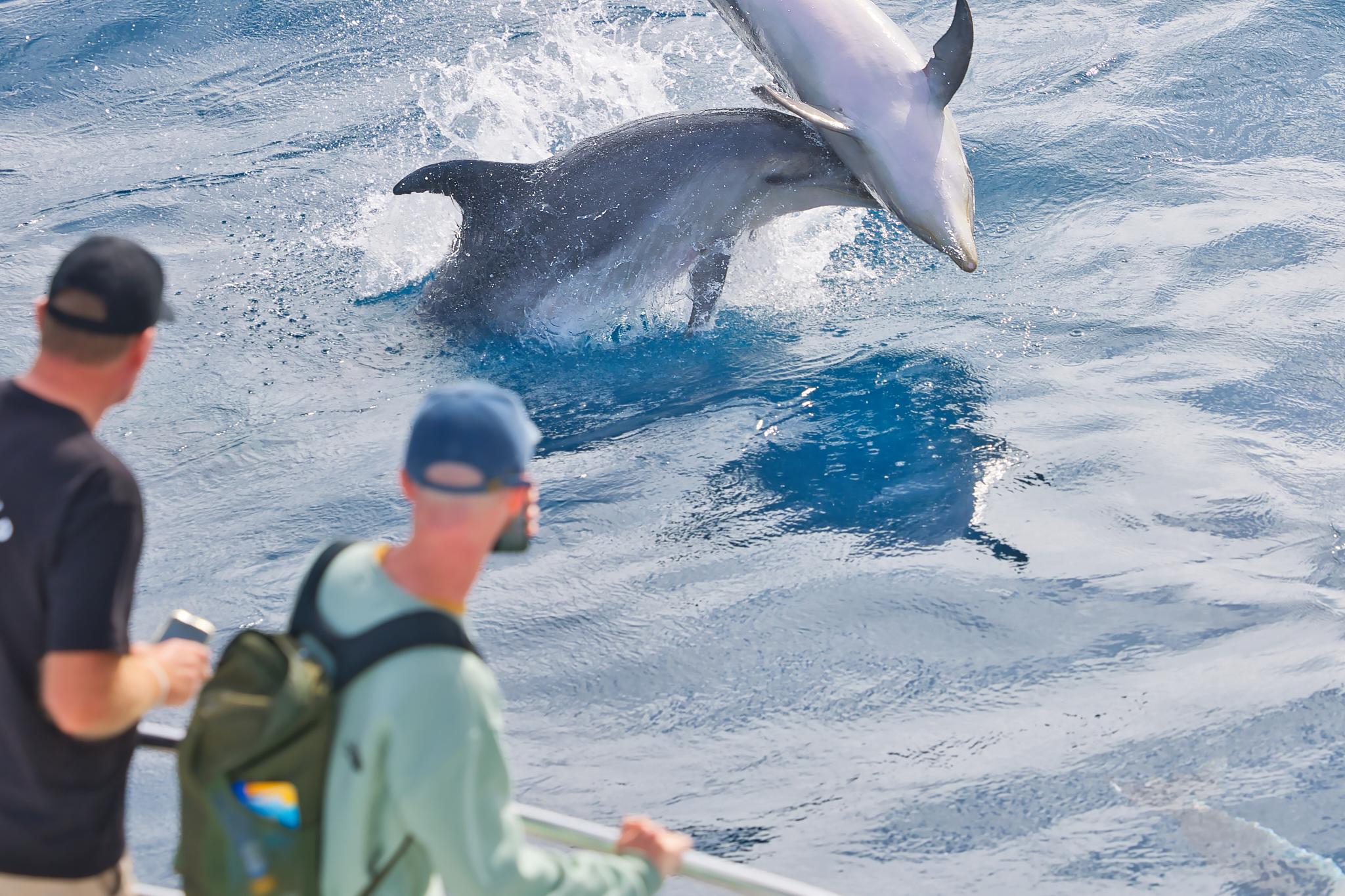
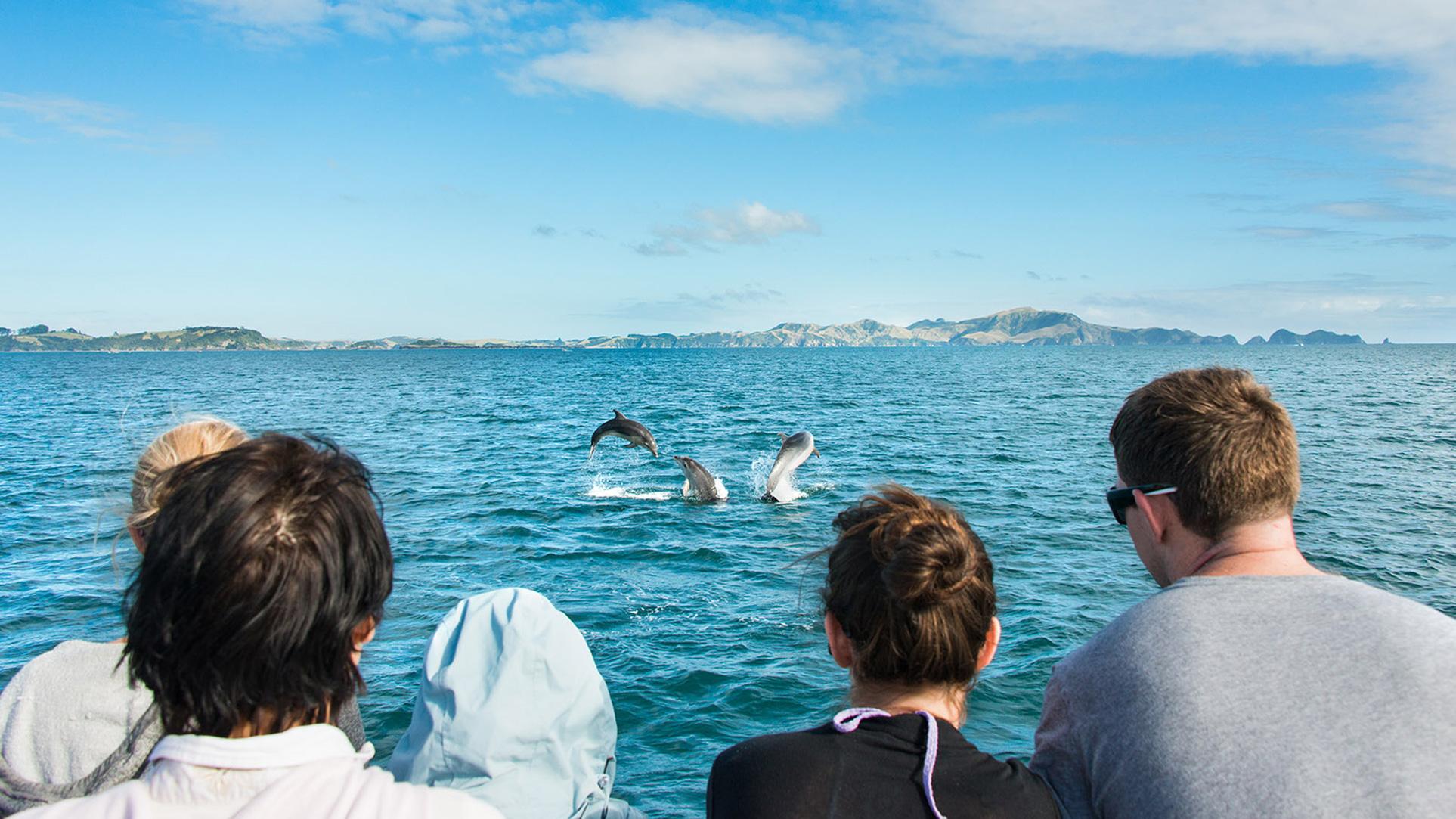
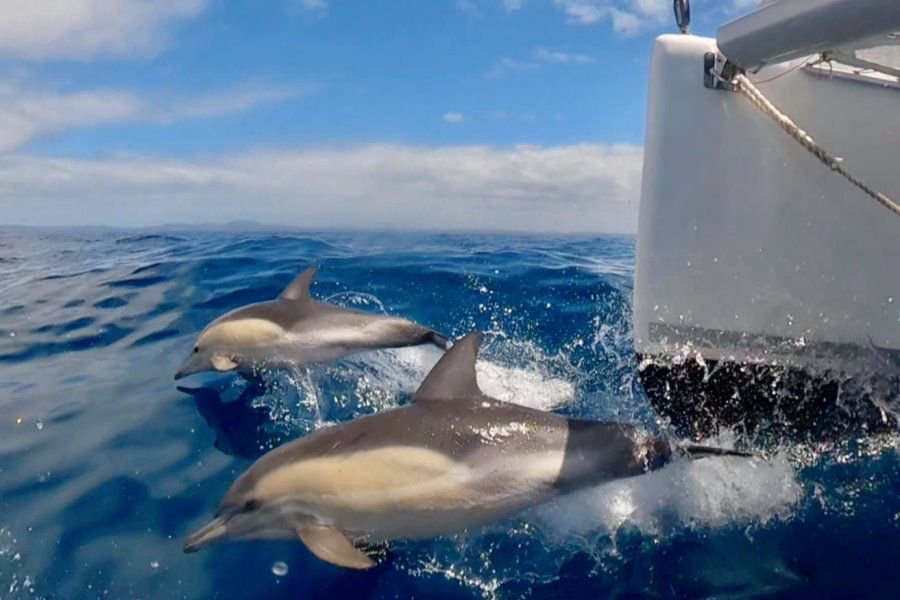
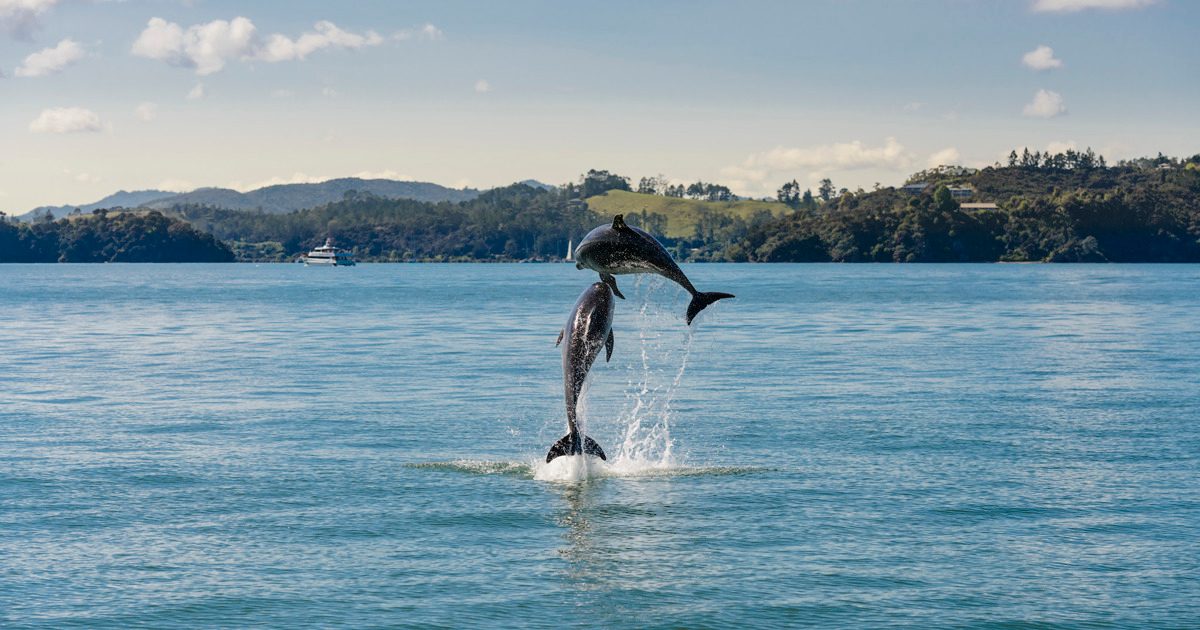
Spray lifts from the bow as you pass Russell on the starboard side, the colonial township shrinking into a line of white weatherboard and red corrugated iron. The skipper cuts speed approaching Cape Brett, scanning for dorsal fins; the first sighting comes two nautical miles offshore, a pod of six bottlenose dolphins surfacing in synchrony, their exhalations audible across the water.
The vessel circles wide, maintaining the 50-metre exclusion zone, then drifts as the dolphins approach on their own terms. Two juveniles break off to bow-ride, their bodies visible three metres below the surface, grey flanks turning silver in the refracted light. You pull on a wetsuit and enter the water from the stern platform; the dolphins circle at a distance, then one passes within arm's reach, eye contact held for three seconds before it arcs down into the blue.
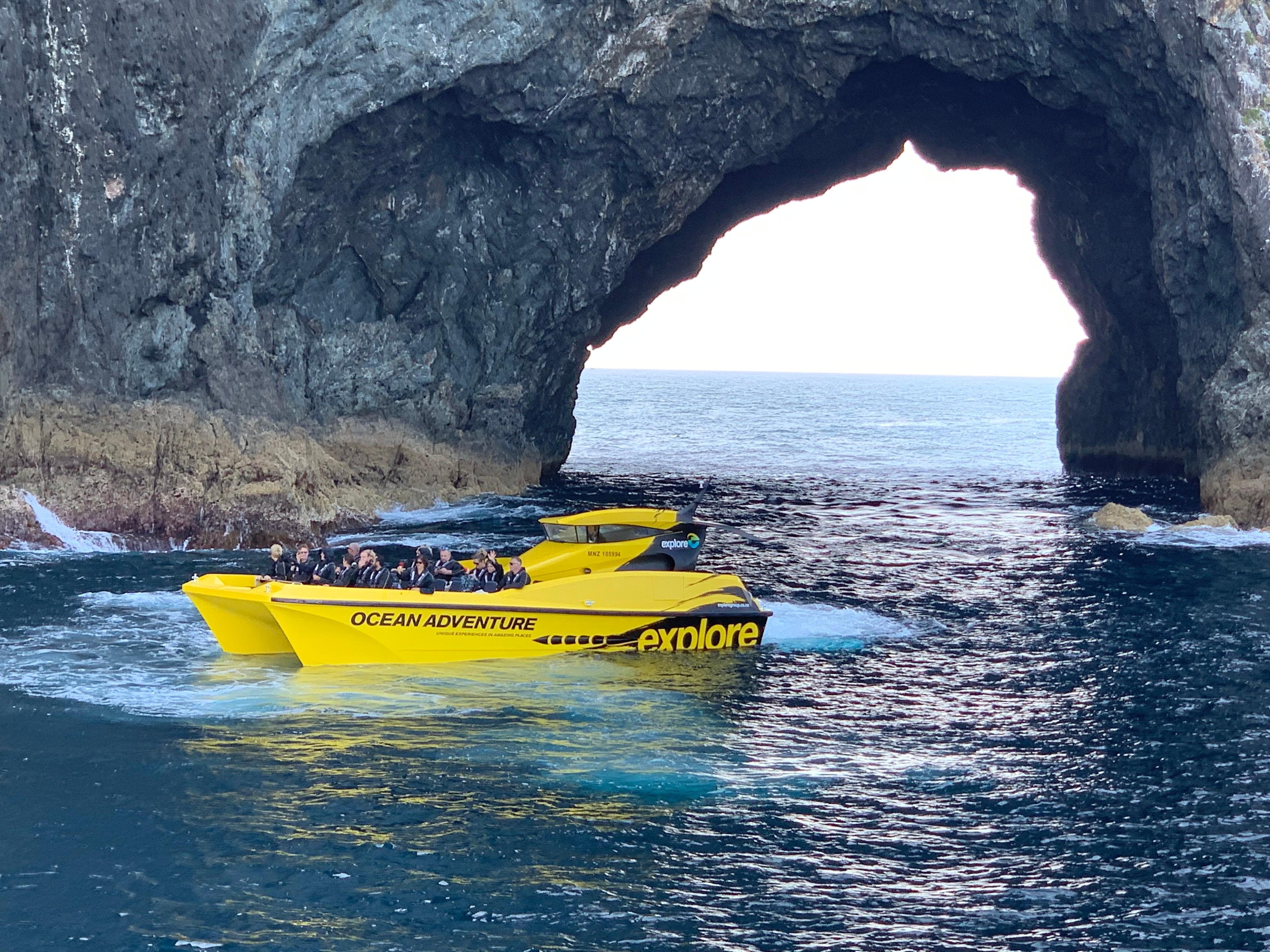
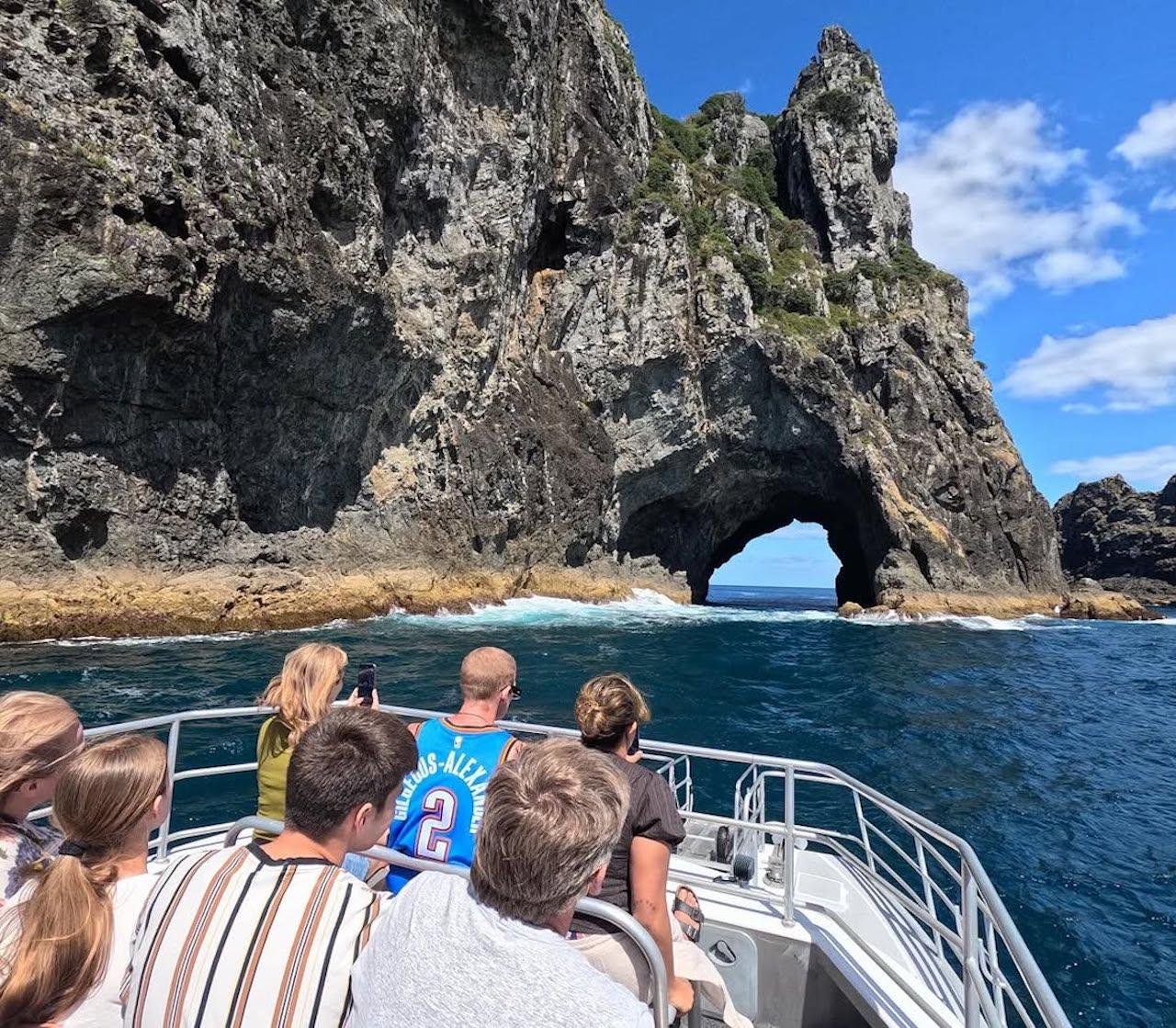
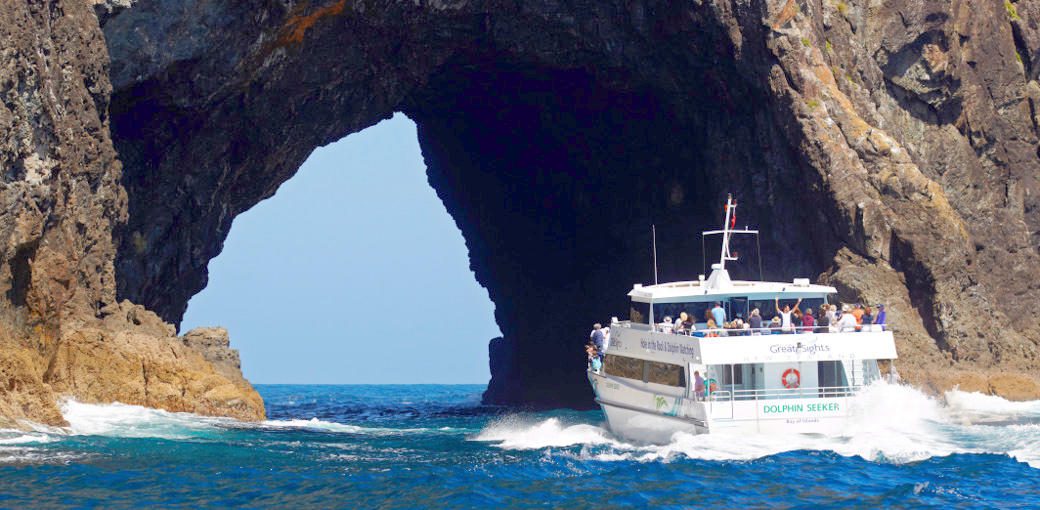
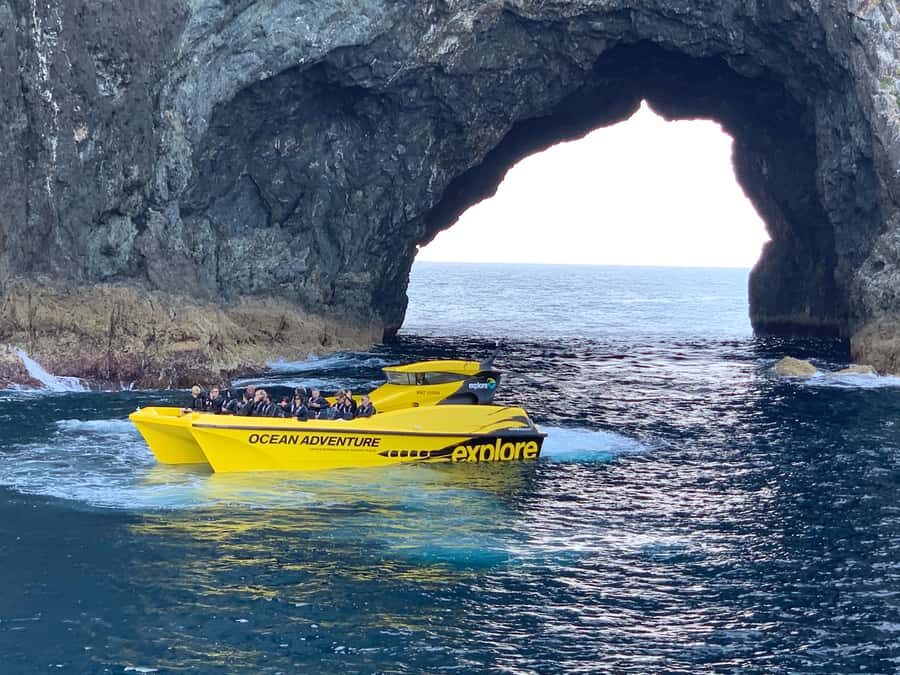
Back aboard, the catamaran turns northeast toward Motukōkako. The arch appears first as a dark notch in the cliff face, then resolves into a tunnel 15 metres wide. The skipper lines up the approach, throttle reduced to bare steerage, and the vessel glides through the cavity in eight seconds. Barnacles crust the interior walls; shafts of light angle through fissures overhead. On the return leg you anchor off Urupukapuka Island for a 30-minute beach landing, then thread back through the inner islands toward Paihia, arriving at 13:00.
All the details about your upcoming adventure in one place
Motukōkako—the Hole in the Rock—stands as a 20-metre-high basalt sea arch carved by millennia of wave action at the entrance to the Bay of Islands. The formation is a navigable tunnel when seas are calm, permitting vessels to pass directly through the cavity during the three-hour window either side of slack tide.
Māori oral tradition names the rock Motukōkako after the kōkako bird, its piercing call said to echo through the stone chamber at dawn. Captain Cook charted the outer islands in 1769 but never recorded the arch; it was Phillip Parker King's survey in 1820 that first mapped the formation and confirmed its dimensions for safe passage.
Today the Bay of Islands sustains a resident population of approximately 400 bottlenose dolphins, the largest concentration in New Zealand's northern waters. The continental shelf drops to 60 metres within two nautical miles of Paihia, creating upwelling currents that drive plankton blooms and draw schooling fish—kahawai, trevally, kingfish—into the feeding corridors that dolphins patrol year-round. Research by the Department of Conservation since 2003 has catalogued individual dolphins by dorsal fin notches, tracking pod dynamics and seasonal movements between the outer islands and the Cavalli Passage. Sightings occur on approximately 85 percent of departures, though the Marine Mammals Protection Regulations prohibit pursuit or encirclement; vessels must maintain a 50-metre exclusion zone unless dolphins approach voluntarily.
The hole in the rock dolphin cruise paihia departs from the Maritime Building on Marsden Road, where the modern fleet ranges from 20-metre catamarans to 15-metre rigid inflatables capable of 30-knot transit speeds. Routes vary by sea state and tide: the standard itinerary crosses the inner bay to Moturua Island, rounds Cape Brett, then approaches Motukōkako from the northeast. When swells exceed 1.5 metres the arch becomes impassable and skippers divert to the sheltered lagoons at Urupukapuka Island, where twin landing beaches permit shore exploration. The return leg threads through the Ninepin group, a scatter of uninhabited islets where gannets nest on the granite outcrops and fur seals haul out on the tidal platforms. Paihia dolphin tours operate year-round, though winter months—June through August—bring shorter daylight and rougher conditions that occasionally force cancellations.
Vessel design reflects the dual mandate of speed and wildlife observation: bow pulpits extend forward to give unobstructed sightlines, while hydrophones mounted below the waterline pipe dolphin echolocation clicks into the cabin. Most operators now carry snorkel gear and wetsuits, permitting in-water encounters when dolphins initiate contact, a protocol that balances visitor experience with conservation guidelines established in 2008. The Bay of Islands marine park covers 800 square kilometres, but the navigable channels between islands compress traffic into predictable corridors where dolphin encounters, rock transits, and island landings converge into a three-hour itinerary that has remained structurally unchanged since commercial operations began in 1987.

Māori oral tradition names the rock Motukōkako after the kōkako bird, its piercing call said to echo through the stone chamber at dawn.
Casual outdoor attire is recommended for the hole in the rock dolphin cruise paihia. Bring layers, as sea breezes can be cool even on sunny days.
Small personal bags are permitted on the hole in the rock dolphin cruise paihia tours. Keep belongings compact to allow for easy movement on viewing decks.
Photography is encouraged throughout the hole in the rock dolphin cruise paihia tour. Ensure your device is secured against sea spray and motion.
Families are welcome on the hole in the rock dolphin cruise paihia tickets, which include specific pricing for children. It is a popular activity for all ages in the Bay of Islands.
The vessel for the hole in the rock dolphin cruise paihia is designed for passenger comfort with spacious decks. Guests should check with operators regarding specific mobility requirements for boarding.
Light snacks and drinks are available for purchase on board. Guests may also bring a small packed lunch to enjoy during the island stopover.
Opening hours
08:30–17:00
Address
Maritime Building, Marsden Road, Paihia 0200, New Zealand
Accessibility
Vessel features large decks and cabin
Best arrival
08:30–14:00
Baggage policy
Light day bags only
Car · Public transport · Shuttle services operate from Waitangi Wharf to Paihia.
Parking available in public lots near the Paihia waterfront.
Bookings are fully refundable if cancelled more than 24 hours prior to departure. No refunds are provided for cancellations within 24 hours of departure or no-shows.
Recommended time
Half a day
Planning your hole in the rock dolphin cruise paihia requires balancing your schedule with the best arrival window of 08:30–14:00 to ensure optimal sea conditions for navigating the formation. These hole in the rock dolphin cruise paihia tours generally occupy a half-day, allowing ample time for wildlife spotting and maritime transit. Securing your hole in the rock dolphin cruise paihia tickets in advance helps manage expectations, as early departures are prioritized to navigate the passage successfully.
Crowd levels through the day
Weather · crowds · average price — dots go green to amber to red as each metric rises.
Mild temperatures and frequent dolphin sightings in the bay.
Secure hole in the rock dolphin cruise paihia tickets well in advance during peak season.
The natural rock archway piercing Motukokako Island became a focal point for Māori navigation centuries before European contact. Known as Motu Kōkako by local iwi, the island held spiritual significance for Ngāpuhi and served as a landmark for waka traveling the eastern Bay of Islands. Captain Cook charted the formation in 1769 during his first Pacific voyage, though he did not pass through the opening itself. The archway measures approximately 18 meters high, carved by millennia of wave action against the volcanic basalt. Commercial interest emerged in the 1970s when local operators recognized the tourism potential of the hole in the rock dolphin cruise paihia route. Fullers GreatSights launched regular passages through the archway in 1979, timing departures to coincide with favorable tides and sea conditions. The Cream Trip, a mail and cargo service dating to 1927, was repurposed to include the rock formation as a turning point. Early vessels required calm seas to navigate the narrow opening safely; several operators reported minor hull damage from misjudged approaches during the inaugural seasons. Dolphin sightings became a defining feature by the mid-1980s. Bottlenose dolphins established year-round residence in the outer bay, drawn by abundant fish stocks near Cape Brett. Operators began advertising wildlife encounters alongside the geological spectacle, and the Bay of Islands Maritime Park regulations formalized dolphin-watching protocols in 1991. The Department of Conservation introduced vessel speed limits and approach distances to protect marine mammals, requiring all hole in the rock dolphin cruise paihia tours to maintain 50-meter buffers from dolphin pods. Today the cruise operates from the Maritime Building in Paihia, with multiple daily departures serving the 170 NZD standard adult fare. Weather permiums restrict passage through the archway during high swells, diverting vessels to alternative routes when seas exceed safe thresholds. The rock formation itself shows measurable erosion, with marine geologists documenting a 12-centimeter widening of the opening between 1995 and 2023.
Māori iwi use Motukokako Island as a navigation marker and spiritual site in the Bay of Islands.
Captain James Cook charts the rock formation during his first Pacific voyage aboard HMS Endeavour.
The Cream Trip mail and cargo service begins operating in the Bay of Islands, later incorporating the rock into tourist routes.
Fullers GreatSights launches the first regular commercial passages through the natural archway.
Bottlenose dolphins establish permanent residence near Cape Brett, becoming a featured attraction on cruises.
Department of Conservation formalizes dolphin-watching protocols and vessel approach distances for the Bay of Islands Maritime Park.
Marine geologists document 12-centimeter widening of the rock opening due to ongoing wave erosion.
Position yourself at the front bow of the vessel to capture the scale of the Motukokako Island cavern as the captain steers through the gap. This hole in the rock dolphin cruise paihia vantage point provides a clear frame of the sea passage.
Stand on the port side railing to photograph dolphins or seals surfacing near the boat during the journey through the Bay of Islands. Use a fast shutter speed to freeze movement against the blue water.
Located at the departure point in Paihia, this area allows for shots of the tour vessels against the backdrop of the harbor before heading out. It offers a stable platform for wide-angle compositions.
Capture the geological details of the rock walls from the outer deck when the boat slows down for viewing. This location requires a longer lens to highlight the textures of the stone formations.
Planning a trip with children requires careful preparation to ensure a smooth maritime experience on your hole in the rock dolphin cruise paihia. These Paihia landmarks provide coastal adventures where families can observe marine wildlife in their natural habitat.
Large strollers are difficult to maneuver on vessels; we recommend using a lightweight carrier or a foldable umbrella stroller for these hole in the rock dolphin cruise paihia tours. Space on deck is limited, so compact gear makes navigation significantly easier for parents.
Maritime buildings in this area typically lack dedicated changing stations, so bring a portable changing mat for use in restrooms. Preparing a travel kit with all necessities allows you to handle needs quickly before boarding your hole in the rock dolphin cruise paihia tour.
Sea conditions can vary, so consider consulting a pharmacist regarding non-drowsy remedies for children before your journey. Choosing an earlier departure time within the 08:30–14:00 window often provides calmer waters for young travelers and those sensitive to boat movement.
Life jackets for children are provided and must be worn according to vessel safety protocols throughout the excursion. Keeping kids engaged with binoculars helps them focus on the horizon and spot marine life while securing your hole in the rock dolphin cruise paihia tickets well in advance.
Visitors departing from the Maritime Building on Marsden Road will find a variety of eateries located just a short walk away, making it easy to grab a meal before your hole in the rock dolphin cruise paihia. While there are no dining facilities on the vessels themselves, the nearby waterfront streets offer convenient spots to fuel up.
Ideal for a quick morning pastry or coffee before you collect your hole in the rock dolphin cruise paihia tickets. They offer a selection of savory pies and sandwiches perfect for a light pre-departure bite.
Located on the wharf, this spot provides great harbor views for those enjoying a meal after returning from their hole in the rock dolphin cruise paihia tour. Their menu features contemporary New Zealand cuisine with an emphasis on fresh seafood.
A relaxed environment suitable for groups looking to discuss their experience of the landmark rock formation. It is a reliable choice for lunch or dinner located within the main hub for local maritime adventures.
Everything you need to know for your journey
The cruise office is open daily from 08:30–17:00.
No, the standard adult fare of 170 NZD covers the entire cruise experience.
Yes, booking in advance is recommended to ensure your spot on the hole in the rock dolphin cruise paihia.
The best arrival window is between 08:30–14:00.
Yes, families are encouraged and children have special fare rates available on the hole in the rock dolphin cruise paihia.
Yes, you can bring light snacks and a packed lunch to enjoy during the island stop.
If the operator cancels the trip due to conditions and no alternative date is found, you are entitled to a full refund.
Yes, most cruises include a 1.5-hour stop at Otehei Bay on Urupukapuka Island.
Check-in takes place at the Maritime Building, Marsden Road, Paihia.
Significant site for New Zealand history and cultural exploration.
Comfortable stay near the waterfront.
Join thousands of happy travelers who have discovered this incredible experience
Book Your Experience Now